
The Micro-Meetup Advantage
When it comes to getting comfortable with prescribed fire technology, there is no substitute for actual stick time. Recently, Evan and I headed up to the Upper Peninsula of Michigan for the Great Lakes Fire Compact annual meeting. The UP is an incredible, heavily forested area right up against Lake Superior. In another life, I got stuck there on a mapping job for several weeks and really fell in love with the place. I was very excited for the opportunity to get back there to show off IGNIS.
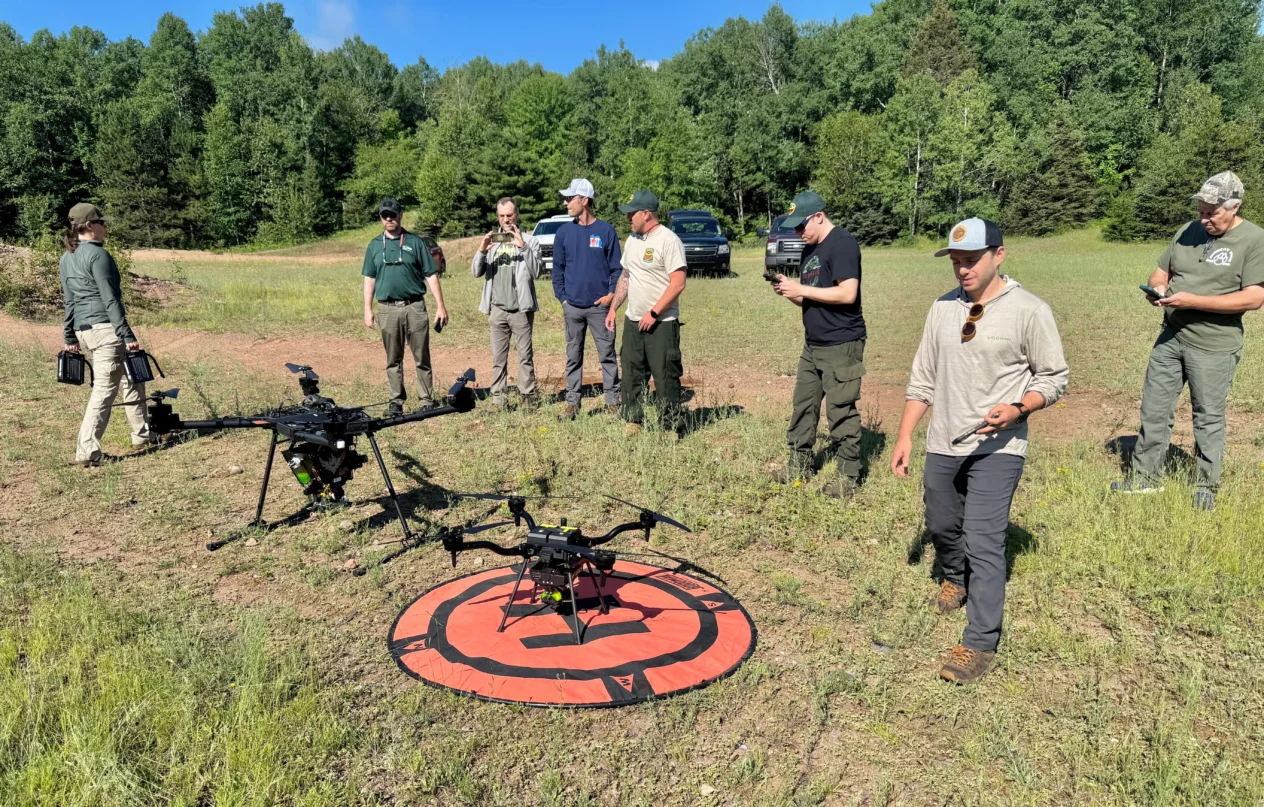
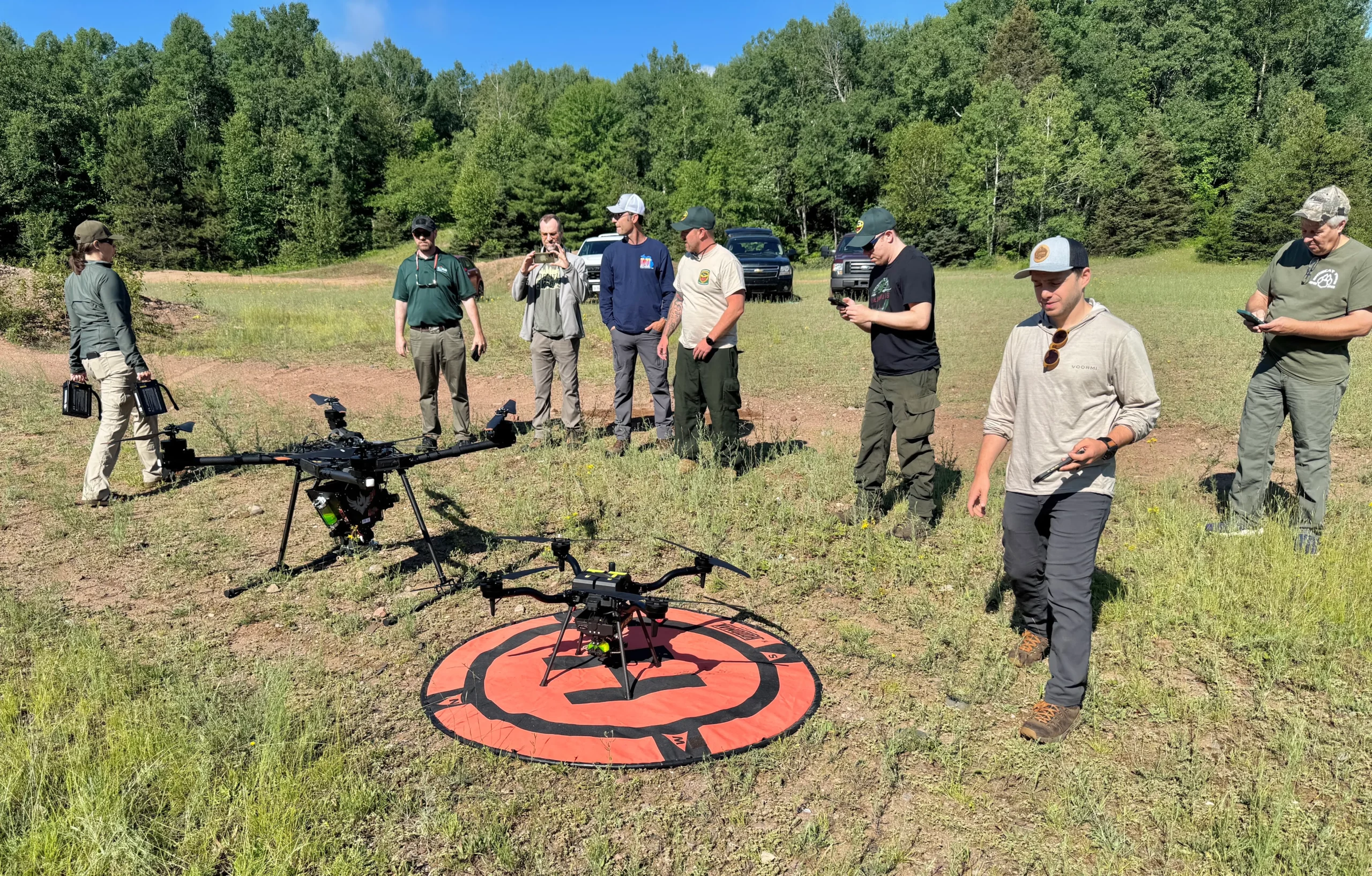
Instead of a massive conference hall, this was a focused, hands-on meetup. We spent our time in the field with operators from the Michigan DNR, Wisconsin, and Ontario, helping them dust off their gear, walking them through the new IGNIS III capabilities, and answering questions in real-time. For crews looking to integrate or master this technology, these focused, micro-level meetups are often far more valuable than traditional trade shows. Instead of just looking at gear on a convention floor, operators get to actually put the equipment in the air.
Drawing Maps in the Air
On the second day, we headed out to a gravel pit to drop live fire. It was a great, safe location to run operations, but we immediately ran into a digital hurdle: when setting up the Alta X, we realized we didn't have the pre-downloaded satellite maps for that specific, remote location.
When you want to run an automated mission and drop spheres safely within a tree line, flying blind on a blank map isn't an option. But instead of scrubbing the flight, Evan walked the team through a slick field adaptation using the projected video overlay.
We manually flew the drone around the perimeter of the gravel pit. By pointing the camera at the tree line and using the projected overlay, the operators were able to drop pins and draw their own boundary in real-time based entirely on the video feed. They built their own safe operational boundary from scratch, right there in the air, and were blown away by the capability.
Nimble Deployments and One-Minute Fixes
The live-fire exercises also highlighted the speed of the newer systems. While the older Alta setups took a few extra minutes to get dialed in, the team setting up the IGNIS 3 on the Astro popped it up and had it ready to fly almost immediately.
For the operators, especially our Canadian partners who are starting to shift away from DJI hardware, getting hands on the Astro was great. There's always anxiety about transitioning to a new flight controller, especially from DJI, but once they got on the sticks, the consensus was clear: the controls feel natural, and at the end of the day, it's just a drone.
This was also a great opportunity to work through some lingering workflow issues in person. The Michigan DNR crew mentioned they had been losing gimbal control during flights. Evan took one look at their setup and realized their Herelink controller screen was set to time out and go to sleep after five minutes, which effectively killed the telemetry connection to the main tablet. We changed the sleep settings, fixing in 60 seconds a problem that would have been a headache to troubleshoot over the phone.
Boots on the Ground
By the end of the trip, everyone had the chance to drop live fire and get highly familiar with the gear. Sitting around during the hot wash at the end of the day, the feedback was exactly what you hope for: the systems worked flawlessly, the transition to the Astro was easy, and having subject matter experts in the field to bounce ideas off of made all the difference.
A huge thank you to the Great Lakes Fire Compact, and the crews from Michigan, Wisconsin, and Ontario for inviting us out. Getting to work alongside the professionals who manage these environments every day is always the best part of the job.
###